





Why Is My Vape So Expensive? Canada's Rising Disposable Prices
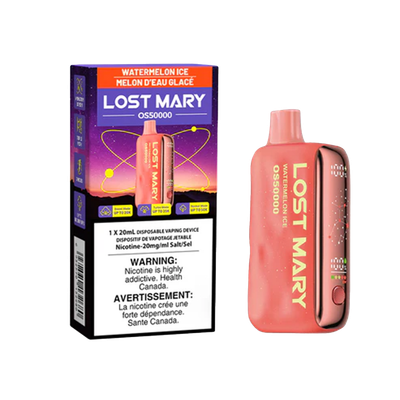
If your last vape order rang in noticeably higher than it used to, you're not imagining it. Ontario shoppers have documented purchases where the combined federal and provincial vaping duty pushed the total tax on a single order past 100% of the product price — a $132.99 order carrying nearly $154 in duty and HST combined — $120.96 in excise duty plus $33.01 in HST. That's not a one-off receipt; it's the result of two separate tax layers that now stack on top of each other across most of the country.
Here's what's actually driving the price increase, what changed in 2026, and how to get more puffs for every dollar you spend.
The Real Reason: Two Taxes Stacked on Top of Each Other
Canada's vape excise system has two layers. A federal vaping duty applies everywhere. On top of that, provinces and territories that joined the "coordinated vaping duty" system charge an equal additional duty — effectively doubling the tax in those regions.
| Vaping Substance | Federal Duty | Additional Duty in a Specified Province | Combined Duty |
|---|---|---|---|
| First 2mL | $1.12 | $1.12 | $2.24 |
| First 10mL | $5.60 | $5.60 | $11.20 |
| 30mL bottle or device | $7.84 | $7.84 | $15.68 |
The federal rate itself increased 12% starting July 1, 2024, under the 2024 federal budget. Ontario, Quebec and Nunavut joined the coordinated duty system the same day, effectively doubling the tax in those provinces overnight. Alberta, Manitoba, New Brunswick, Prince Edward Island and Yukon followed on January 1, 2025. These duty figures don't include GST/HST or provincial sales tax, which apply on top.
The same combined-duty math applies to bottled e-liquid, not just disposables. A 30mL bottle carries $15.68 in combined duty in a specified province before HST — on a $20 bottle, that's more than three-quarters of the shelf price before tax is even added. Since the duty is calculated per mL rather than per bottle size, splitting a purchase into smaller bottles doesn't reduce the total duty paid; it's charged at the same rate either way.
Which Provinces Have the Highest Vape Tax?
As of 2026, ten provinces and territories charge the additional coordinated duty on top of the federal rate: Alberta, Manitoba, New Brunswick, Northwest Territories, Nova Scotia, Nunavut, Ontario, Prince Edward Island, Quebec and Yukon. In these regions, the combined federal-plus-provincial duty is roughly double the federal-only rate.
British Columbia, Newfoundland and Labrador, and Saskatchewan have not joined the coordinated duty system as of mid-2026, so vaping products sold there carry only the federal duty. There's no public timeline for whether or when these three will join — the CRA's specified-province list has grown roughly once a year since 2024, so it's worth checking the current list before assuming a province's status hasn't changed.
Nova Scotia's 2026 Change (What Just Happened)
Nova Scotia became a specified vaping province in 2026. The CRA published the notice on February 26, 2026, with the additional duty taking effect April 1, 2026, and a transition period allowing existing stock to sell through until June 30, 2026. Since July 1, 2026, any vaping product sold in Nova Scotia has carried the doubled combined duty.
Local reaction has tracked the pattern seen in Ontario and Quebec when they joined: shoppers report per-bottle costs climbing noticeably compared to before the additional duty applied.
What Vapers Are Saying
The price jump hasn't gone unnoticed. On Reddit's r/Vaping, a thread titled "Vaping in Canada got too expensive" sparked active discussion among shoppers comparing what they used to pay against current prices. A related thread in r/electronic_cigarette, "New tax in Canada," covers a similar reaction to the added duty.
These threads reflect individual shoppers' experiences, not a scientific survey of all Canadian vapers — but the general pattern (surprise at checkout, comparing prices across provinces, looking for better value) is consistent with what's shown publicly on both threads.
How to Get More Value Per Dollar
Because vaping duty is charged per mL rather than per puff, the math works in favour of higher-capacity devices. A device with a larger e-liquid fill costs more in absolute duty, but the duty per puff drops sharply as capacity goes up — so the tax increase hits low-capacity disposables hardest on a cost-per-puff basis.

The math holds across brands, not just one device. The Lost Mary OS50000, from $32.99 CAD, works out to roughly $0.66 per 1,000 puffs. The Mr Fog Nova 36K, from $35.99, comes out at about $1.00 per 1,000 puffs, and the Geek Bar Pulse X 25000, from $32.99, at about $1.32 per 1,000 puffs. By comparison, the MASKKING GTS 2,000-puff disposable, priced from $20.99, works out to about $10.50 per 1,000 puffs — up to 16 times higher on a per-puff basis, even before factoring in how often you'd need to replace it.
If you're deciding where to put your budget under the new tax rates, browsing by puff count rather than sticker price is the more accurate way to compare. See the full range of high-capacity devices in our guide to the best disposable vape brands in Canada.
What About Refillable Pod Systems?
Duty applies to e-liquid volume, not to the device itself — so a refillable pod system's ongoing cost depends on how much e-liquid you buy over time, the same as a disposable. The difference is that a device like the Vaporesso XROS 5 ($22.99) is a one-time hardware purchase, and only the e-liquid you refill it with is taxed going forward. For heavier or longer-term use, that can spread the duty cost out further than repeatedly buying full disposable units, each of which bakes in its own duty-paid e-liquid supply.

Frequently Asked Questions
Why did vape prices go up in Canada in 2026?
Vape prices rose because of a combination of the 12% federal excise duty increase (July 2024) and the rollout of an additional "coordinated" provincial duty that doubles the total tax in participating provinces. Nova Scotia was the most recent province to join, with the additional duty applying since April 1, 2026.
Which provinces have the highest vape tax?
As of 2026, Alberta, Manitoba, New Brunswick, Northwest Territories, Nova Scotia, Nunavut, Ontario, Prince Edward Island, Quebec and Yukon charge the additional coordinated duty on top of the federal rate. British Columbia, Newfoundland and Labrador, and Saskatchewan do not currently charge the additional provincial duty.
How can I save money on vapes with the new tax?
Since duty is charged per mL of e-liquid rather than per puff, higher-capacity disposables generally cost less per puff than smaller ones, even though their sticker price is higher. Comparing devices by cost-per-1,000-puffs rather than upfront price is the most reliable way to reduce the effective cost under the new tax rates.


